
The blockchain development landscape is experiencing a fundamental shift. What once required weeks of smart contract coding, security audits, and protocol integration can now be accomplished in minutes. This isn't hyperbole: it's the reality of low-code Web3 integration in 2026.
If you're building decentralized applications, leading a development agency, or running a startup that wants to ship Web3 features without burning months of runway, this shift changes everything about how you approach blockchain integration.
Building on blockchain has historically meant assembling a specialized team, navigating multiple technical layers, and accepting development timelines that would make any startup founder nervous.
The traditional workflow looks something like this: write and test smart contracts, conduct security audits, build frontend integrations, handle wallet connections, manage transaction states, implement error handling for blockchain-specific edge cases, and then maintain all of this as protocols evolve.
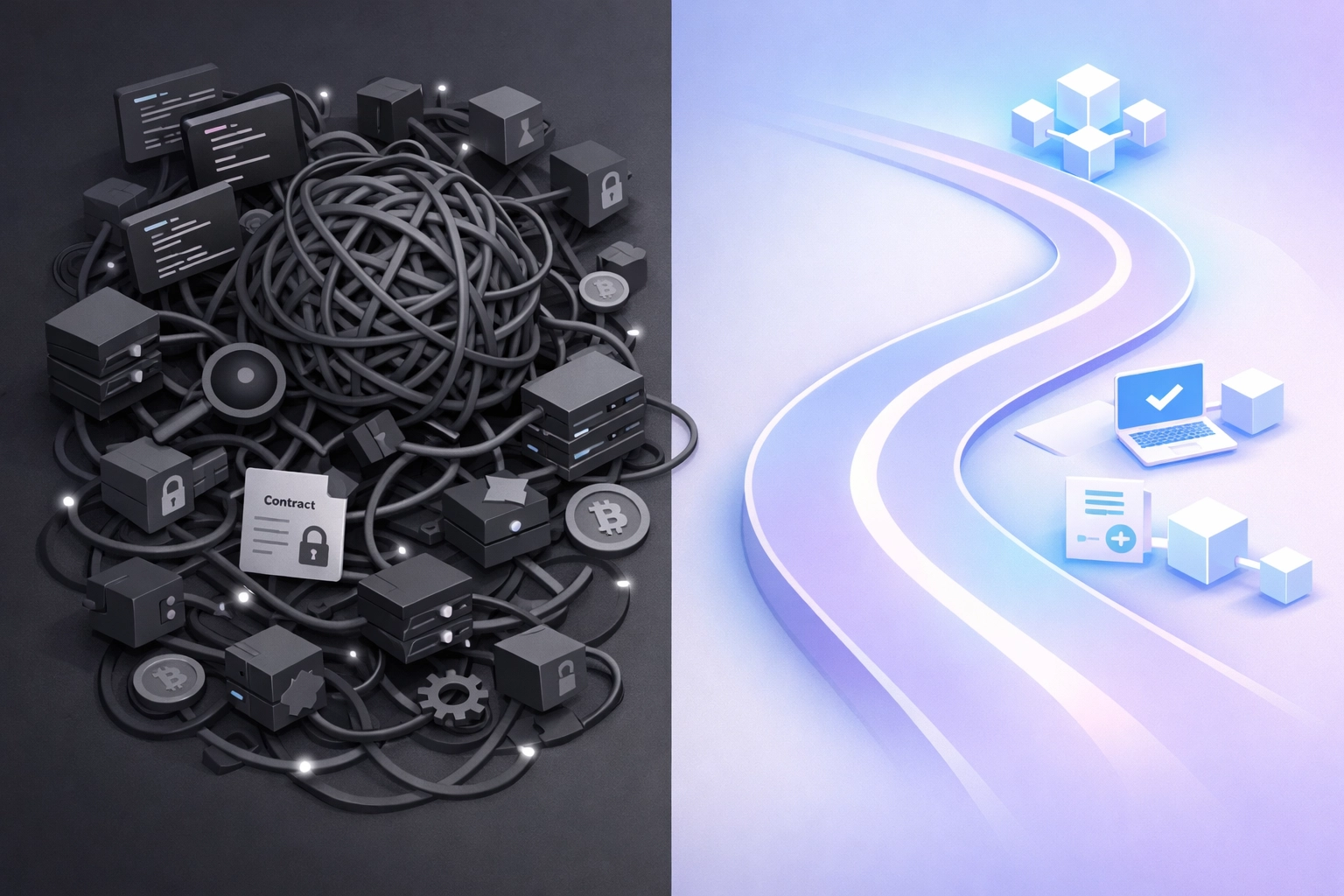
Each step requires deep expertise. Your team needs to understand Solidity or Rust, know the nuances of different blockchain protocols, implement secure key management, and build interfaces that abstract away complexity for end users. For a startup trying to validate a product-market fit or an agency juggling multiple client projects, this overhead becomes prohibitive.
The result? Great ideas stay on whiteboards. MVPs take six months instead of six weeks. Agencies turn down blockchain projects because the engineering lift doesn't match the budget.
Low-code Web3 platforms eliminate the layers of complexity between your application and blockchain functionality. Instead of writing smart contract calls from scratch, you work with pre-built components, automated workflows, and simplified APIs that handle the protocol-level details.
This isn't about dumbing down blockchain development. It's about intelligent abstraction. The security, transparency, and decentralization benefits remain intact: you're just not rebuilding foundational infrastructure every time you need to add Web3 features to a project.
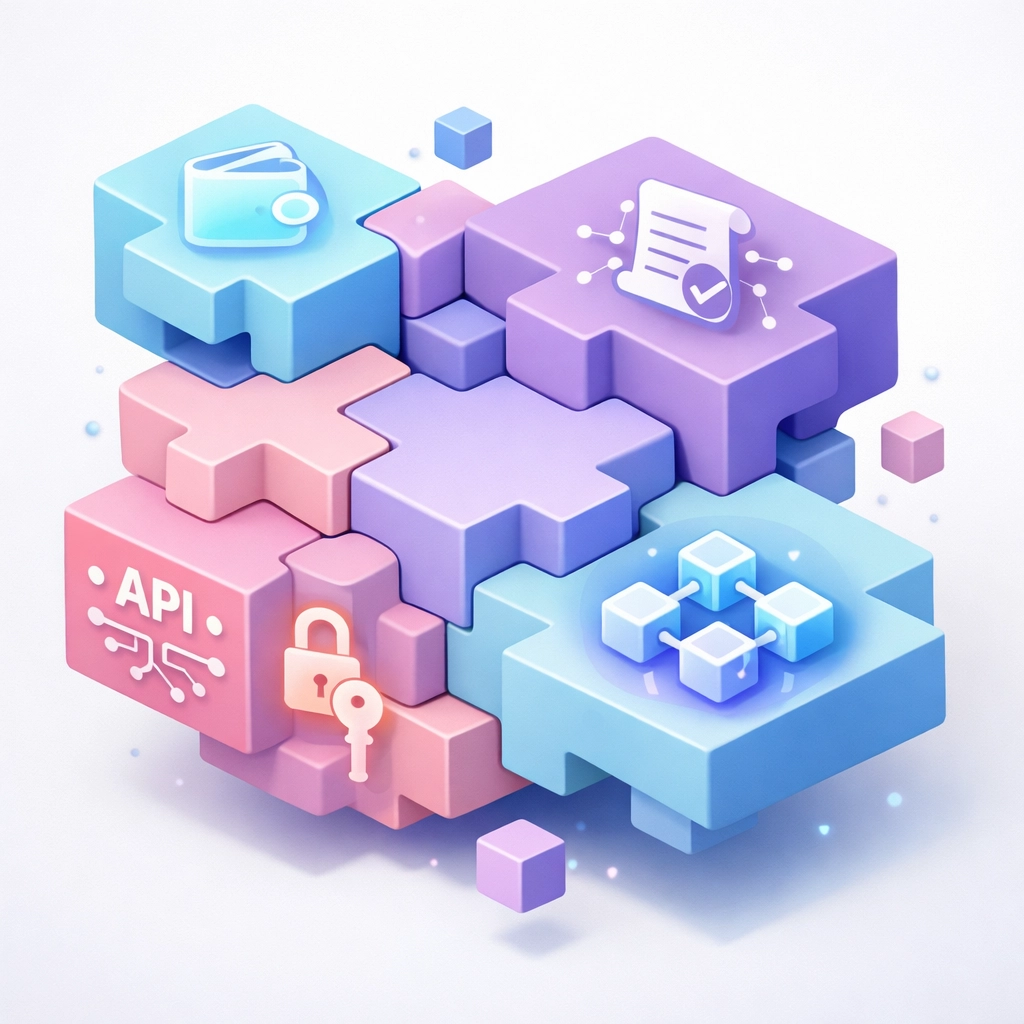
Modern low-code platforms provide:
Pre-configured smart contract interactions that work across multiple chains without protocol-specific code. You define what you want to happen, and the platform handles the underlying calls, gas optimization, and transaction management.
Visual workflow builders that let you map out blockchain logic the same way you'd design any other integration. Connect NEAR wallet authentication to your Webflow site. Trigger smart contract calls from Zapier. Read on-chain data and push it to your CRM.
Built-in security patterns that eliminate common vulnerabilities. Instead of manually implementing access controls and key management, you work with tested, audited components that follow best practices by default.
Multi-chain capabilities through unified APIs. Build once, deploy across 24+ blockchains without learning different SDKs or rewriting integration logic.
Speed is the obvious benefit, but the strategic implications run deeper. Low-code Web3 integration fundamentally changes who can build blockchain applications and how quickly they can respond to market opportunities.
Startups can validate Web3 features in days instead of quarters. You don't need to raise a seed round just to hire blockchain developers. Ship an MVP with NEAR wallet integration, test market response, iterate based on real user behavior. The feedback loop that makes lean startups successful becomes possible in Web3.
Agencies can take on blockchain projects profitably. When integration takes hours instead of weeks, the economics make sense. Your existing team can deliver Web3 functionality without specialized hiring. You can offer blockchain features as part of broader digital products rather than requiring separate blockchain-only engagements.
Development teams can experiment with selective blockchain integration. Instead of rebuilding entire platforms around Web3, you add blockchain where it creates real value: supply chain transparency, decentralized identity, multi-party settlements, NFT features. Use traditional databases for what they're good at. Use blockchain for what it's uniquely suited for.
This selective approach is where low-code platforms create the most value. You're not choosing between "Web3 everything" or "no blockchain at all." You're choosing specific use cases that benefit from decentralization and implementing them without disrupting your entire tech stack.
The shift becomes concrete when you look at actual implementation scenarios.
A design agency building a client website in Webflow can add NEAR wallet connection in the same time it takes to set up a third-party analytics integration. No custom backend. No blockchain SDK setup. Just a configuration interface and a few lines of JavaScript.

A SaaS product can implement NFT-based access control by triggering smart contract verification through their existing automation tools. Someone purchases an NFT, Zapier catches the event, calls the verification function, grants platform access. The entire flow runs through familiar tools with familiar interfaces.
An e-commerce platform can add on-chain product verification without touching their core database architecture. Product metadata lives where it always has. Verification records live on blockchain. Customers scan a QR code and see immutable proof of authenticity. The blockchain layer integrates with: not replaces: existing systems.
These implementations don't require blockchain specialists. They require developers who understand APIs, webhooks, and integration patterns they already use daily. The learning curve is measured in hours, not months.
The technical barrier to blockchain integration has dropped low enough that strategic thinking becomes the constraint, not engineering capacity. You can now ask "should we add Web3 features?" without immediately calculating months of development time and specialized hiring costs.
This changes planning conversations. Product roadmaps can include blockchain experiments the same way they include any other feature test. Marketing teams can propose NFT campaigns without needing engineering to sign off on massive technical lift. Operations teams can explore supply chain transparency without convincing leadership to fund a six-month blockchain initiative.
The democratization is real. Teams that previously couldn't justify blockchain development overhead can now build decentralized applications. Not because blockchain got simpler: because the tools got better.

In 2026, your Web3 integration stack looks remarkably similar to your existing development workflow. You work in the platforms you already use: Webflow for websites, Zapier or Make for automation, your standard frontend frameworks for custom applications.
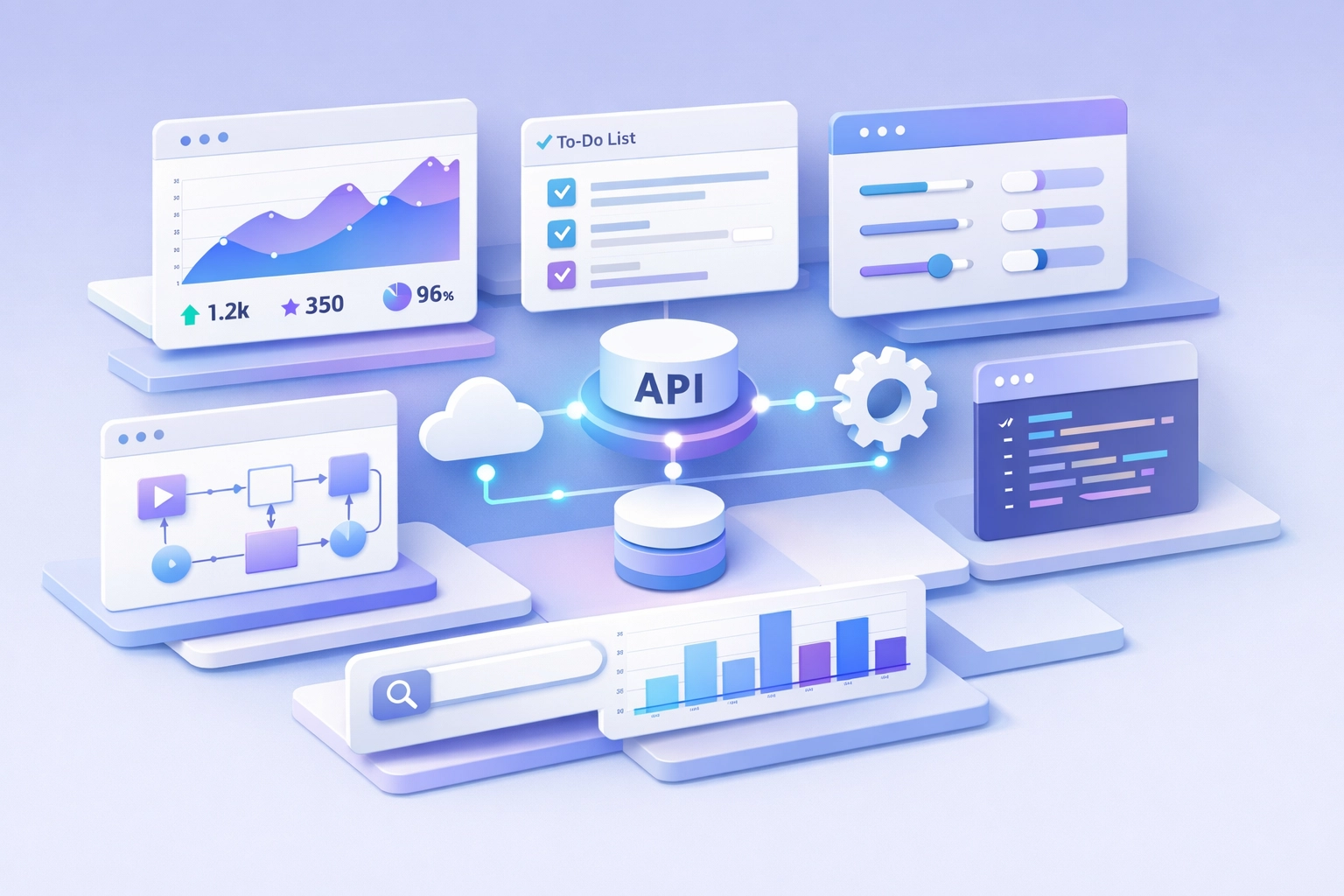
The blockchain layer plugs in through APIs and SDKs designed for exactly this purpose. Platforms like Kiews provide the abstraction between your application logic and blockchain protocols, handling the complexity of wallet connections, transaction management, and smart contract interactions behind clean interfaces.
You maintain control over user experience and application flow. The blockchain components work as services in your broader architecture, not as the foundation that determines everything else about your stack.
This approach scales with your needs. Start with simple wallet authentication. Add token transfers when you need them. Implement custom smart contract calls as use cases emerge. The integration complexity doesn't compound: each addition works through the same patterns and interfaces.
The barrier to entry is low enough that you can start experimenting this week. Pick a single use case that would benefit from blockchain. Maybe it's wallet-based authentication instead of traditional login. Maybe it's on-chain verification for digital goods. Maybe it's a simple token transfer workflow.
Build that one feature using low-code Web3 tools. See how it performs. Gather user feedback. Measure the implementation time against traditional development approaches. The learning happens through doing, not through months of theoretical blockchain study.
Your existing team can handle this. If they can integrate a payment processor or connect to a third-party API, they can implement Web3 functionality through modern low-code platforms. The skills transfer directly.
The vision isn't about making blockchain easier for its own sake. It's about unlocking the use cases that make sense: the applications where decentralization, transparency, or on-chain verification create genuine value: without forcing teams to become blockchain-first companies to access those benefits.
When integration takes minutes instead of months, blockchain becomes a tool you use where appropriate, not a technical religion that defines your entire architecture. That pragmatic approach is what drives mainstream adoption. Not blockchain evangelism. Just useful technology, accessible when you need it.
The builders who recognize this shift early: who start experimenting with low-code Web3 integration while competitors are still debating whether to hire Solidity developers: will ship features that take others quarters to replicate. That's the competitive advantage in 2026.
The infrastructure is ready. The tools exist. The only question is whether you'll use them before your competition does.
%202.svg)


